
You spend roughly a third of your life on your mattress, and it quietly absorbs everything the night throws at it: sweat, shed skin cells, the occasional spilled cup of tea. Unlike sheets, it cannot go in the washing machine. That is why so many mattresses go years without a proper clean, and why they start to smell faintly musty long before they wear out. The fix does not involve steam cleaners, expensive equipment or a dry-cleaning budget. A vacuum, some bicarbonate of soda and a little patience will lift most stains, reduce dust mites and clear stale odours — without soaking the mattress through.
What you will need
- A vacuum cleaner with an upholstery attachment
- Bicarbonate of soda
- A spray bottle or clean squeezy bottle
- Several clean white cloths (white, so no dye transfers onto the fabric)
- Mild liquid detergent, such as washing-up liquid
- An enzyme-based cleaner for urine, pet accidents and other protein stains
- Cool water
- A mattress protector, if you do not already use one
Check the care label and any manufacturer instructions before you start. Some mattresses have specific guidance about water, and a few should not be flipped.
Step one: strip the bed, air the room and vacuum
Pull off the bedding and put it straight in the wash. Bedding washed at 60°C is the simplest way to deal with dust mites and their allergens, so use that setting for sheets, pillowcases and protectors whenever the fabric allows.
While the mattress is bare, open a window and let the room air for half an hour. Then vacuum — and this is the step most people rush. Fit the upholstery attachment, work in slow overlapping strokes, and go over the whole surface rather than just the middle. Pay attention to the seams, the piping and any tufted or quilted dips, because that is where dust, crumbs and skin flakes collect.
Use suction, not pressure. Pressing the nozzle hard into the fabric pushes debris deeper and can distort the filling. When you have finished the top, vacuum the sides and, if the mattress has no stains or damp patches, the underside too.
Step two: lift stains without soaking the mattress
The golden rule is small amounts of liquid, applied to the cloth rather than poured onto the bed. Dampen, blot, and stop as soon as the mark stops transferring. A soaked mattress takes far longer to dry than most people expect, and trapped moisture leads to mildew inside the filling.
Test any product on a hidden area first — the underside of a corner is ideal — and give it a few minutes to see whether the colour changes.
Fresh spills and accidents
Blot as much as you can with a dry cloth, then use cool water with a drop of mild detergent. Cool, not hot: heat sets protein stains such as blood, milk and urine, making them much harder to shift. For urine and pet accidents, an enzyme cleaner works better than soap because it breaks down the proteins causing the smell. Spray lightly, leave it to dwell for the time stated on the bottle, then blot and repeat if needed.
Dried-in or greasy marks
For older marks, mix a thick paste of bicarbonate of soda and a little water, spread it over the stain and leave it for twenty minutes before wiping away with a damp cloth. Grease responds well to this, as do tea and coffee marks on pale fabric. Work from the outside of the stain inwards so you do not spread the ring outwards.
A word of caution: never mix vinegar with bleach-based products, and avoid over-wetting the same patch repeatedly.
Step three: deodorise and cut down dust mites
Bicarbonate of soda for odours
Once the mattress is dry to the touch, sprinkle a thin, even layer of bicarbonate of soda across the surface. Leave it for at least fifteen minutes; a few hours is better if the room is well ventilated and the mattress is not damp. It absorbs odour and surface moisture as it sits. Then vacuum it all up, slowly and thoroughly. If you like a scent, add a couple of drops of essential oil to the bicarbonate before sprinkling — but keep it light, because oils can mark pale fabric.
Dust mites: the part most people skip
Dust mites thrive in warm, humid conditions and feed on shed skin cells, which is why mattresses and pillows are such a favourite. Their droppings are a common trigger for allergy symptoms and nighttime congestion, so reducing them is worth the effort. You do not need to kill every mite; you need to keep the population and the mess they leave behind under control.
- Wash bedding weekly, and at 60°C regularly.
- Keep bedroom humidity down by airing the room daily and using an extractor fan or dehumidifier if condensation is a problem.
- Vacuum the mattress surface and seams as described above.
- Use a washable, breathable mattress protector and clean it with the bedding.
If you have asthma or a diagnosed allergy and your symptoms are worse in bed, speak to your GP or pharmacist — a mattress clean helps, but it is not a substitute for proper advice.
How often to repeat each step
- Bedding: wash weekly; hot wash every few weeks.
- Quick vacuum of the mattress: monthly, or every time you change the bedding if you have pets or allergies.
- Bicarbonate deodorise: every one to two months, and after illness, night sweats or a spell of humid weather.
- Stain treatment: as soon as a mark appears — the fresher it is, the easier it lifts.
- Full deep clean: every three to six months.
- Rotation: follow the manufacturer's guidance. Many modern mattresses should be rotated head to foot rather than flipped, and some should not be turned at all.
Drying and putting the bed back together
A dry mattress is a clean mattress. Before you remake the bed, press a clean cloth against the treated areas and check for any coolness or dampness. Leave the mattress bare with the window open for a few hours, and use a fan on a low setting if the room is still. Only put the bedding back when it is completely dry, because covering a slightly damp mattress traps moisture against the fabric and encourages that damp, dusty smell you were trying to remove.
A routine that actually sticks
Deep cleaning a mattress is not a job anyone looks forward to, so tie it to something you already do. Strip the bed on a Saturday morning, vacuum the bare mattress while the sheets are in the machine, and sprinkle bicarbonate of soda before you leave the room. By the time the washing is dry, the powder is ready to vacuum up and the bed is ready to remake.
That three-step loop — vacuum, treat, deodorise — covers almost everything a mattress throws at you. Add an enzyme cleaner for accidents and a protector for everyday protection, and you will get a fresher, longer-lasting bed without ever soaking it.
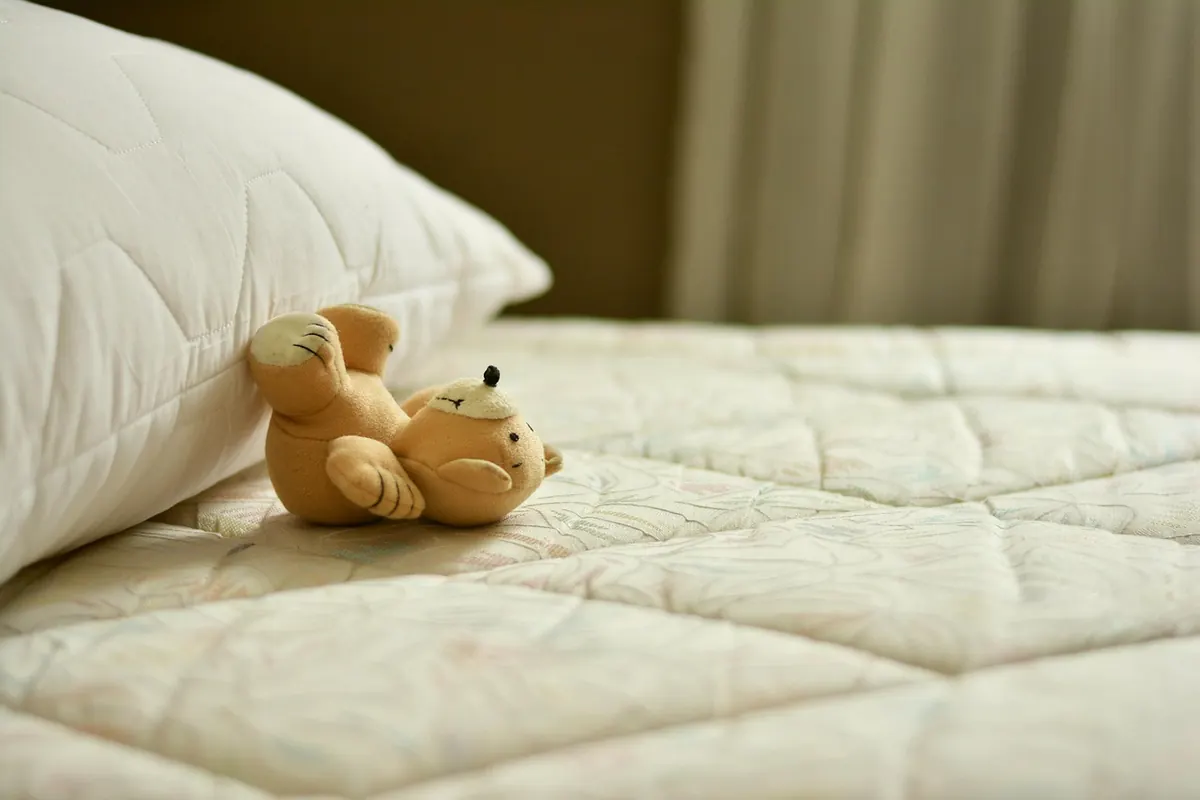
Photo: congerdesign / Pixabay